
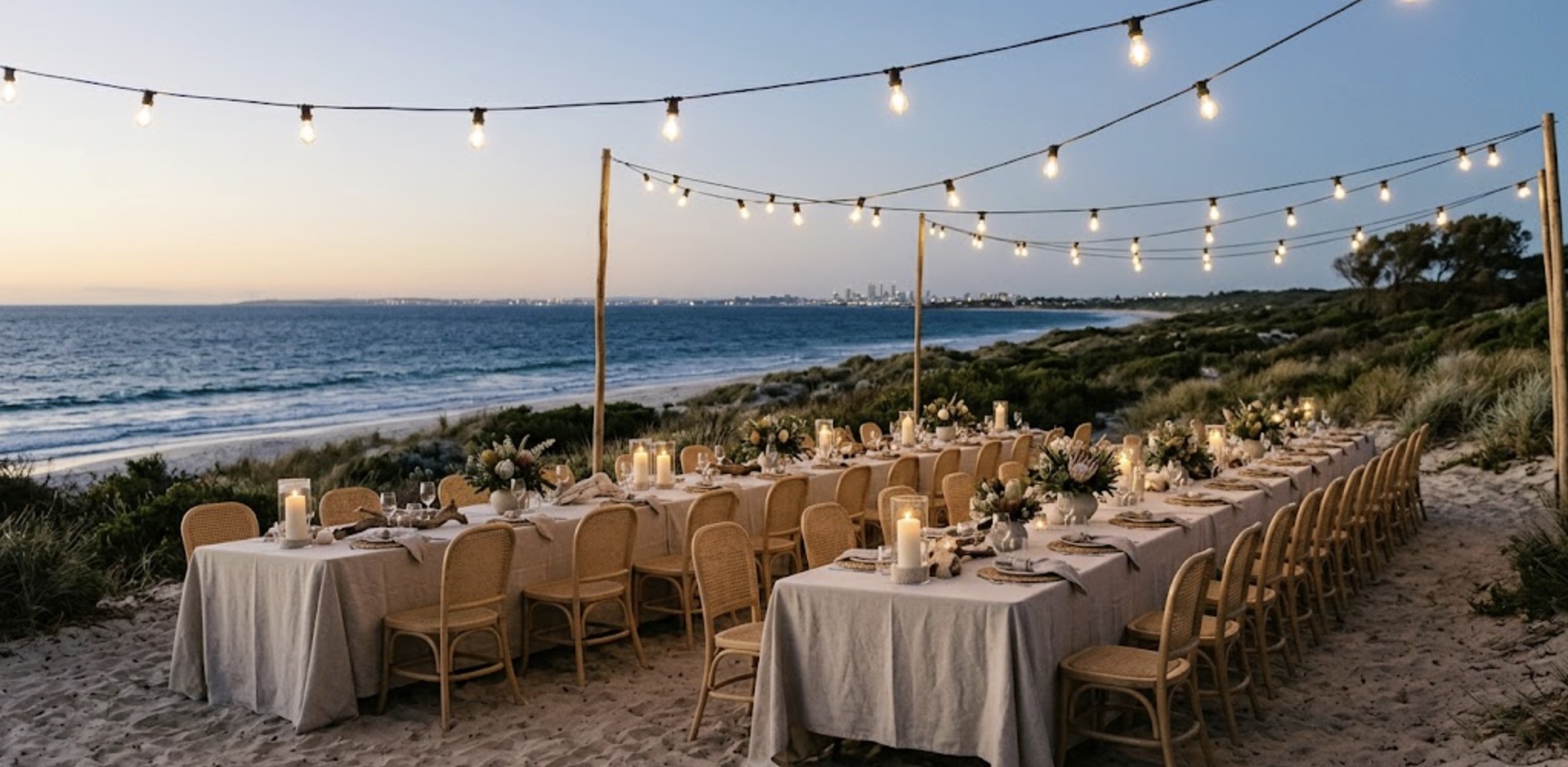
Have you ever spent months planning the perfect outdoor event, only to spend the final week obsessively checking the weather forecast and hoping for the best?
If you’ve organised an outdoor wedding, corporate function, or birthday celebration in Perth, you already know that our weather has a personality of its own. The good news is that unpredictable conditions don’t have to derail your event. With the right planning and the right furniture choices, you can be ready for whatever the sky throws at you. The first step is knowing how to hire outdoor furniture for your event with the weather firmly in mind.
Understanding Perth’s Weather and What It Means for Your Event
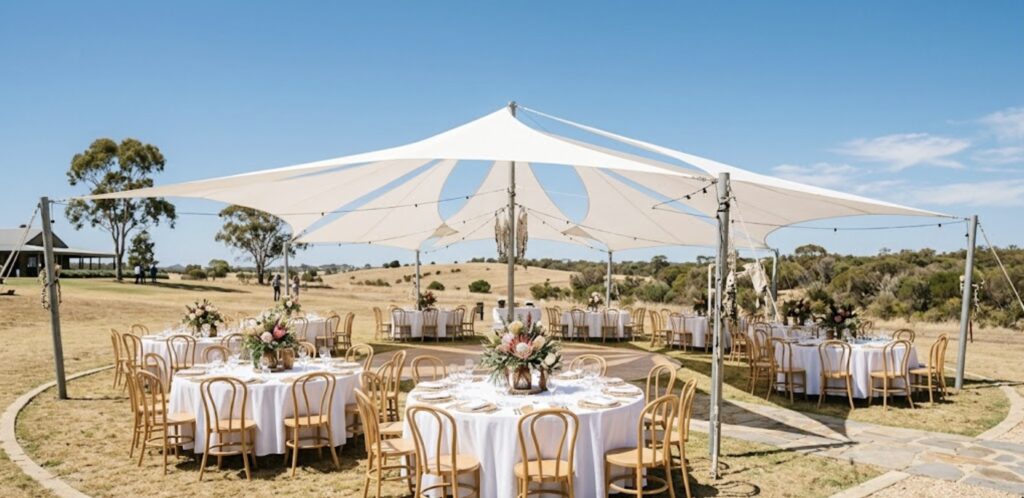
Perth is a beautiful city to host an outdoor event; sunshine, stunning venues, and that unmistakable Western Australian charm. But anyone who’s lived here for more than a season knows that our weather can shift from glorious to genuinely difficult in a very short space of time. Planning around that reality isn’t pessimistic; it’s just smart event management.
Perth’s Climate Is More Unpredictable Than It Gets Credit For
Most people associate Perth with endless sunshine, and for a lot of the year, that reputation is well deserved. But our climate comes with some real curveballs. Summer events have to contend with extreme heat and the occasional scorching easterly wind that can push temperatures well above 40 degrees with very little warning.
Spring is arguably the trickiest season of all; warm and beautiful one day, windy and overcast the next. Even autumn, which is generally considered Perth’s most reliable event season, can surprise you with a late afternoon sea breeze that arrives stronger than expected.
How Heat, Wind, and Rain Each Create Different Challenges
Each weather condition presents its own unique set of challenges when it comes to outdoor furniture and event planning.
Heat affects guest comfort more than almost anything else. Lightweight furniture that absorbs and radiates heat can make seating deeply uncomfortable during a summer afternoon event. Direct sun exposure on metal surfaces can make chairs and tables genuinely too hot to touch, which is something a lot of event planners don’t consider until it’s too late.
Wind is perhaps the most disruptive force for outdoor furniture. Lightweight chairs, tall cocktail tables, and decorative elements can become hazards in a strong gust. Perth’s notorious Fremantle Doctor that afternoon sea breeze that rolls in from the southwest, is a predictable feature of summer days, but its strength and timing can still catch you off guard.
Rain, while less frequent during Perth’s dry season, is always a possibility in the shoulder months. Even a brief shower can make certain furniture slippery, damage unsealed materials, and send guests scrambling for cover if there’s no adequate shelter in place.
Why Venue Location and Time of Day Matter More Than You’d Think
The specific location of your venue plays a huge role in how the weather affects your event. Coastal venues are more exposed to wind but often benefit from cooling sea breezes on hot days. Venues surrounded by trees or buildings may offer natural wind protection, but can also trap heat. Riverside and lakeside settings tend to be more humid, which affects both guest comfort and certain furniture materials over time.
Time of day is equally important. A midday summer event in direct sun is a very different planning exercise to an early evening gathering where temperatures are dropping, and a breeze is picking up. Matching your quality outdoor furniture for events to the specific conditions of your venue, your season, and your event timing is what separates a comfortable, well-executed gathering from one where guests spend the whole time battling the elements.
Choosing the Right Furniture for Outdoor Conditions
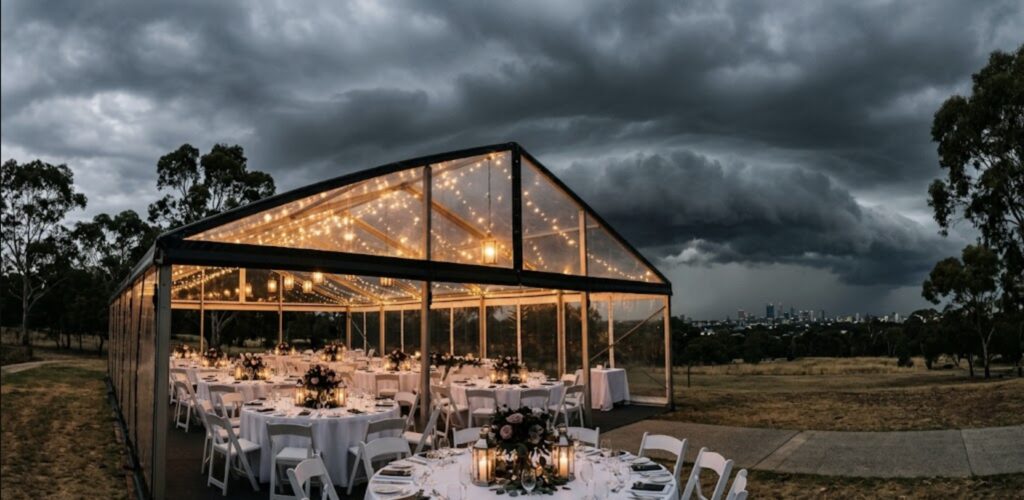
Walking through a furniture hire catalogue and picking whatever looks most beautiful is a perfectly natural starting point, but for outdoor events, aesthetics can only take you so far. The furniture you choose needs to look great and perform well under real outdoor conditions. Those two things aren’t mutually exclusive, but finding the sweet spot requires knowing what to look for and why it matters.
Materials Make All the Difference
The material your furniture is made from is the single most important factor when it comes to outdoor performance. Not all materials are created equal, and some that look stunning in a showroom or catalogue photo can become genuinely problematic once they’re sitting outside in Perth’s conditions.
Powder-coated aluminium is one of the best performers for outdoor use. It’s lightweight enough to move and rearrange easily, resistant to rust and corrosion, and doesn’t absorb heat the way raw metal does. It also holds up well in the rain without deteriorating. Resin and high-quality plastic furniture is similarly weather-resistant and easy to clean, making it a practical choice for high-traffic outdoor events.
Timber furniture adds warmth and character to an outdoor setting, but it does require a little more consideration. Untreated or poorly sealed timber can warp, stain, or become slippery when wet. Treated hardwoods and teak are far more durable options that handle moisture and sun exposure without losing their appeal.
Fabric choices for cushions and upholstery matter just as much as the frame material. Look for outdoor-rated fabrics that are UV-resistant, quick-drying, and treated to repel moisture. Standard indoor upholstery can fade, stain, and retain moisture in ways that make it entirely unsuitable for an outdoor setting.
Stability and Weight: The Overlooked Essentials
Lighter furniture is easier to move around and rearrange, which sounds like a straightforward advantage. But in a venue exposed to wind, lightweight pieces can become a real problem. Tall cocktail tables are particularly vulnerable; a strong gust can topple them easily, creating both a safety hazard and a logistical headache mid-event.
Stability comes down to base design as much as overall weight. Wide-based cocktail tables, chairs with a low centre of gravity, and furniture designed specifically for outdoor use will always outperform indoor pieces that have simply been moved outside for the occasion. Ballast bags, furniture anchors, and strategic placement against windbreaks are all worth discussing with your hire company before the event.
Matching Furniture Styles to Your Event Format
Different event formats call for different furniture configurations, and this has a direct impact on how well your setup handles outdoor conditions. A seated dinner requires stable tables and comfortable chairs that guests will occupy for an extended period; comfort and sturdiness are the priorities. A cocktail-style event with standing guests and high tables is more flexible in terms of layout but more vulnerable to wind, given the height of the furniture involved.
Lounge settings, such as low sofas, ottomans, and coffee tables, work beautifully for relaxed outdoor events but need to be positioned thoughtfully. Placing lounge furniture in exposed areas without shade or wind protection is a recipe for uncomfortable guests and furniture that’s shifting around throughout the event.
How the Right Choices Help Make Your Outdoor Event More Comfortable
Ultimately, every furniture decision you make contributes to how your guests experience the event. Choosing pieces that stay cool in the sun, remain stable in a breeze, and dry quickly after a light shower means your guests can focus on enjoying themselves rather than working around the conditions. That’s exactly what it means to truly make your outdoor event more comfortable, and it starts with making informed furniture choices well before the event day arrives.
Smart Layout Planning That Accounts for the Elements
Choosing the right furniture is only half the equation. Where you place it, and how you arrange it in relation to the sun, wind, shade, and shelter, has just as much impact on how your event feels for the people attending it. A thoughtful layout can transform an exposed outdoor space into a comfortable, well-protected setting that works with the environment rather than against it.
Work With the Sun, Not Against It
The position of the sun throughout your event is something that’s easy to overlook during the planning stage, but impossible to ignore on the day. For afternoon and early evening events, the sun sits low in the western sky and can create direct, uncomfortable glare that hits guests right in the eyes, particularly those seated at tables facing west.
Before finalising your furniture layout, think about where the sun will be during the peak hours of your event and position seating accordingly. Wherever possible, orient tables and chairs so guests aren’t facing directly into the sun. Use shade structures, umbrellas, and existing natural shade from trees or buildings to create comfortable zones that stay cool and shaded throughout the event.
For summer events that run through the hottest part of the afternoon, consider clustering your main seating areas in the shadiest parts of the venue and using more open, exposed areas for circulation and standing space rather than seated dining.
Use Wind Direction to Your Advantage
Understanding the prevailing wind direction at your venue is genuinely useful information when it comes to laying out your furniture. In Perth, the Fremantle Doctor typically arrives from the southwest during summer afternoons, which means west and southwest-facing open spaces will cop the full force of it while areas sheltered by buildings, fences, or dense vegetation will remain noticeably calmer.
Where possible, position taller and more wind-vulnerable furniture, such as cocktail tables, floral arrangements, and signage, in naturally sheltered spots. Use lower lounge furniture and seating in more exposed areas where the wind is harder to avoid. If your venue offers very little natural wind protection, it’s worth discussing the addition of temporary windbreak structures with your event stylist or venue coordinator before the day arrives.
Anchoring lightweight furniture is another practical step that’s easy to arrange in advance. Furniture weights, ballast bags, and ground anchors can be used discreetly to add stability to cocktail tables and other tall pieces without affecting the overall look of your setup.
Create Flexible Zones That Can Adapt Quickly
One of the smartest things you can do when planning an outdoor event layout is to build in flexibility from the start. Rather than committing every piece of furniture to a fixed position, think about which elements could be moved quickly and easily if conditions change during the event.
Designating a covered or semi-covered area as a comfortable retreat zone, with lounge seating, a bar setup, or a dessert station, gives guests somewhere to gravitate naturally if the weather turns. This kind of flexible zoning means you’re not scrambling to reorganise the entire layout if a sea breeze arrives earlier than expected or a brief shower rolls through.
It also helps to brief your event staff or coordinator on the contingency plan in advance. Knowing which furniture moves first, where it goes, and how quickly it can be repositioned means the transition happens smoothly and with minimal disruption to your guests.
Plan Shelter and Furniture Together, Not Separately
A mistake that comes up more often than you’d expect is treating shade structures and shelter as an afterthought, something to add once the furniture layout is already locked in. The most effective outdoor event setups plan shade, shelter, and furniture as a single integrated system from the very beginning.
Marquees, stretch tents, sail shades, and pergola structures all create different environments underneath them, and the furniture placed within those environments needs to suit the scale, height, and airflow of the space. At Time 2 Hire, we work with event organisers regularly and understand how furniture placement and shelter structures interact, so don’t hesitate to lean on that experience when you’re working through your layout decisions.
Having a Backup Plan: Because Perth Weather Doesn’t Always Cooperate
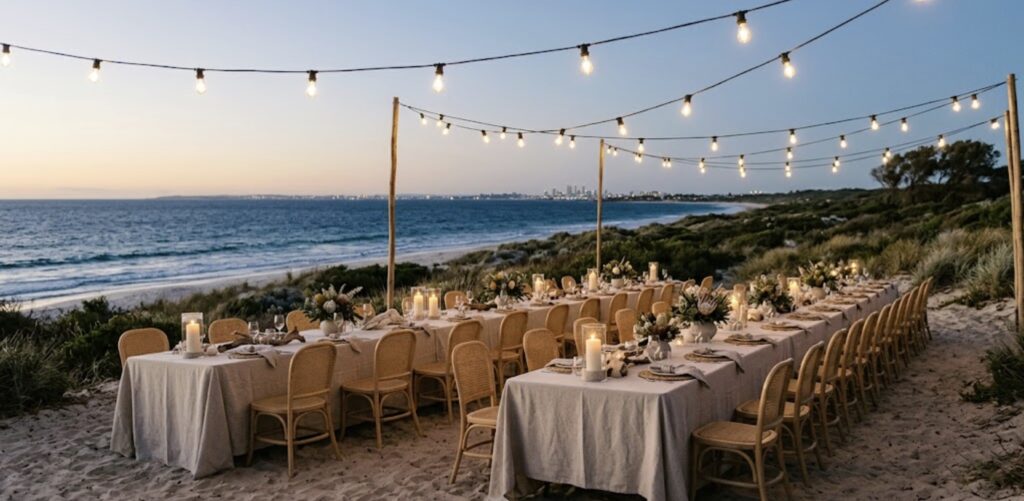
Even the most carefully planned outdoor event can find itself at the mercy of unexpected weather. And while we’d all love to guarantee blue skies and a gentle breeze on the day, the reality of planning an outdoor event in Perth is that a solid backup plan isn’t optional; it’s essential. The good news is that having a contingency in place doesn’t have to be complicated, and it certainly doesn’t mean expecting the worst. It just means being prepared for it.
Build Your Backup Plan Early, Not the Night Before
The most common mistake event planners and hosts make with wet weather contingencies is leaving them too late. A backup plan that’s cobbled together 24 hours before the event is stressful, expensive, and often incomplete. A backup plan that’s been thought through from the beginning of the planning process is none of those things.
Start by identifying your worst-case scenario for the venue and time of year. Is it raining? Extreme heat? A stronger-than-expected wind? Once you know what you’re most likely dealing with, you can make specific, practical decisions about how to respond if that scenario actually plays out. This might mean booking a marquee or covered area as a guaranteed fallback, identifying which furniture pieces need to be moved indoors first, or arranging a clear signal system with your event staff for when the contingency kicks in.
Building flexibility into your furniture hire booking from the outset is also worth discussing with your hire company early. Knowing what your options are around last-minute layout changes, additional pieces, or adjusted delivery and pickup times gives you genuine peace of mind rather than a vague sense that things will probably work out.
Communicate the Plan Clearly to Everyone Involved
A backup plan only works if everyone involved in your event knows about it. This means your venue coordinator, your catering team, your styling team, your furniture hire company, and any other vendors who will be on site on the day. Each of them needs to understand what the trigger is for activating the contingency, what their specific role is when that happens, and how quickly things need to move.
Clear, simple communication in advance eliminates confusion and delays when conditions change quickly. A brief written summary of the wet weather plan shared with all vendors a week before the event is a small investment of time that pays off enormously if you actually need to use it.
For guests, a brief note on your event invitation or a message sent closer to the date acknowledging that the event is planned outdoors with a covered contingency in place manages expectations and reduces anxiety, particularly for guests who might otherwise be checking the forecast nervously in the days leading up to the event.
Working With Your Furniture Hire Company on Flexibility
Your furniture hire company is one of your most important partners when it comes to weather contingency planning, and it’s worth having an open, detailed conversation with them early in the process. A good hire company will understand the realities of outdoor events and be willing to discuss flexible arrangements around delivery timing, setup configuration, and what happens if conditions on the day require a change of plan.
Questions worth raising with your hire company include whether furniture can be set up under cover initially and moved outdoors once conditions are confirmed, what the process is for last-minute layout adjustments, and whether there are additional pieces available at short notice if your contingency plan requires a different configuration than your original setup.
Understanding exactly what furniture you need for an outdoor event, including what your backup scenario requires, is a conversation best had well before the event date, not on the morning of. The more clearly you can articulate your needs and your contingency requirements, the better positioned your hiring company is to support you effectively.
What to Do When Conditions Change on the Day
Even with the best planning in the world, sometimes conditions change faster than expected and decisions need to be made quickly. Having a designated decision-maker on the day, someone with the authority to call the contingency and set things in motion, is one of the most practical steps you can take.
This person should know the backup plan inside out, have direct contact details for all vendors, and be empowered to act without needing to consult multiple people before making a call. In a fast-moving weather situation, clear leadership makes the difference between a seamless transition and a chaotic scramble that your guests notice and remember for all the wrong reasons.
The other practical step is to keep a close eye on conditions from the morning of the event rather than waiting until something goes wrong. Weather apps, local forecasts, and simply looking at the sky give you advance warning that allows for a calm, organised response rather than a reactive one.
Great Events Don’t Leave the Weather to Chance: And Neither Should You
Does the idea of hosting a stunning outdoor event feel a little less daunting now that you have a clear plan of attack?
With the right furniture choices, a thoughtful layout, and a solid backup plan in your back pocket, Perth’s unpredictable weather goes from being a source of stress to just another variable you’ve already accounted for.
Outdoor events are some of the most memorable and beautiful gatherings you can host, and they stay that way when the planning behind them is just as impressive as the setting itself. When you’re ready to bring it all together, Time 2 Hire is here to help make it happen.